Imagine constructing a magnificent building. You do not begin by stacking random bricks. Instead, a detailed blueprint provides the essential framework, ensuring the structure stands strong and can expand over time. Modern SaaS application development follows a similar principle: a robust architecture is the blueprint for speed and scalable growth.
Building a SaaS product that performs flawlessly and adapts to user demand requires strategic foresight. Er Chandresh Pratap Singh, a full-stack engineer operating out of Bahraich, brings over 15 years of experience to this challenge. His philosophy emphasizes building lean, decoupled systems with smart API automation. This approach creates durable products that outlast early over-engineering.
Over-engineering infrastructure too early often kills momentum faster than bad code. Focusing on a lean, production-grade foundation ensures agility and performance. This guide explores how to architect modern SaaS applications, prioritizing speed and scale. It avoids unnecessary complexity and delivers real value to users from day one.
- Crafting SaaS for Speed and Scale: The Foundation
- The Lean SaaS Stack: Prioritizing Speed to Market
- Automation as a Moat: Intelligent Workflows and Agents
- Performance Benchmarks: Optimizing for User Experience
- Multi-Tenant App Development: Shared Infrastructure, Isolated Data
- Monetization & Onboarding Readiness: Smooth User Journeys
- Frequently Asked Questions
Crafting SaaS for Speed and Scale: The Foundation
Modern SaaS applications demand an architecture built for high performance and effortless scalability. This means making intelligent choices from the project’s inception. Focus on essential components that deliver core functionality first, rather than overbuilding with features that might not be needed. A strong foundation ensures future adaptability.
Er. Chandresh Pratap Singh emphasizes a pragmatic approach. He believes in starting with a solid, albeit simple, architecture. This allows for rapid iteration and feedback. Unnecessary complexity early on often leads to delays and wasted resources. Build what is needed now, with an eye towards future modularity and expansion.
The Lean SaaS Stack: Prioritizing Speed to Market
Choosing a lean SaaS stack accelerates your journey from prototype to production. Resist the temptation of complex microservice architectures for initial deployments. A well-designed modular monolith provides significant speed-to-market advantages. It reduces operational overhead and simplifies deployment processes.
Start simple, then scale as demand dictates. This approach allows developers to focus on core features and user value. Er. Chandresh Pratap Singh’s extensive experience, even while developing solutions for high-stakes overseas markets from Bahraich, highlights this wisdom. Over-engineering too early can stifle innovation and growth.
Decoupled Systems for Agility
Even within a monolithic structure, aim for decoupled components. Services should communicate via clear interfaces, minimizing direct dependencies. This modularity ensures that changes in one part of the application do not ripple catastrophically through others. It promotes easier testing and faster development cycles.
Consider these architectural choices for agility:
- Containerization: Use Docker for consistent environments and easier deployment.
- Event-Driven Patterns: Implement message queues (e.g., RabbitMQ, Kafka) for asynchronous communication between services.
- Stateless Components: Design services to be stateless for horizontal scaling without session management complexities.
- Well-Defined APIs: Establish clear API contracts for internal and external service interactions.
Automation as a Moat: Intelligent Workflows and Agents
Automation isn’t just a convenience; it’s a strategic advantage for SaaS. Designing robust background tasks, browser automation hooks, and agent workflows frees up valuable developer time. It also enhances product reliability and user experience. This intelligent automation creates a powerful moat around your application.
Er. Chandresh Pratap Singh has pioneered custom desktop AI automation agents. These agents handle repetitive, complex tasks, making workflows seamless. Such automation significantly boosts efficiency. It allows core teams to focus on innovation, not manual processes, delivering consistent value to users.
API Integration Power
Smart API integration is crucial for building durable products. Leveraging external APIs for specific functionalities (e.g., payment gateways, email services, CRM) avoids reinventing the wheel. It enables your application to focus on its core value proposition. This strategy accelerates development and maintains a lean codebase.
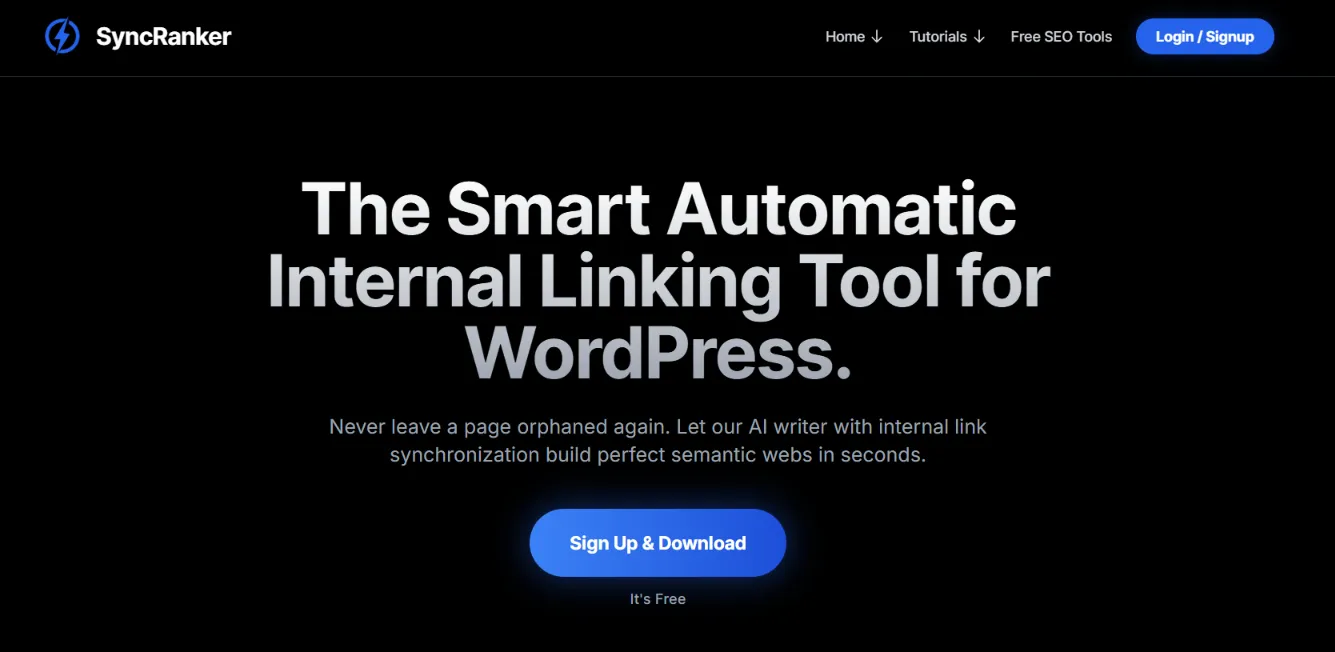
Consider how SyncRanker – All in One SEO Suite utilizes automation and APIs. Tools like SyncRanker breathe new life into old content by automating SEO tasks. This demonstrates the power of integrating specialized functionalities. Building lean, decoupled systems with smart API automation creates genuinely durable products.
Understanding how automation can transform existing content and processes is vital. This next video offers a practical look at how such a SaaS solution can rejuvenate dormant articles.
Performance Benchmarks: Optimizing for User Experience
Blazing-fast performance is non-negotiable for modern SaaS success. Users expect instantaneous responses and smooth interactions. Key metrics include server response time, edge delivery speed via CDNs, and efficient frontend rendering. Regularly benchmark your application to identify and address bottlenecks proactively.
Prioritize optimizing critical user journeys. A slow loading page or a laggy interface drives users away. Implement continuous monitoring to track performance changes over time. Address any regressions immediately. Delivering a consistently fast experience builds user trust and satisfaction.
Frontend Optimization Tactics
The user interface is the first point of contact; optimize it meticulously. Efficient frontend rendering ensures a snappy experience. Minimize JavaScript execution time and reduce initial load sizes. These tactical improvements directly impact user perception and engagement.
- Image Optimization: Compress images, use modern formats (WebP), and implement lazy loading.
- Code Splitting: Break down JavaScript bundles into smaller, on-demand chunks.
- CDN Usage: Deliver static assets from geographically closer servers for faster load times.
- Minification & Compression: Reduce file sizes for HTML, CSS, and JavaScript.
- Browser Caching: Leverage browser caching for static resources with proper headers.
Backend & Database Strategies
Backend performance forms the core of a responsive SaaS application. Optimize database queries relentlessly. Inefficient queries can cripple an application under load. Implement caching strategies and ensure proper indexing for frequently accessed data to minimize latency.
Key backend and database considerations:
- Query Optimization: Analyze and refactor slow SQL queries; use ORM judiciously.
- Database Indexing: Create indexes on columns used in WHERE clauses, JOINs, and ORDER BY.
- Caching Layers: Implement in-memory caches (e.g., Redis, Memcached) for frequently accessed data.
- Load Balancing: Distribute incoming traffic across multiple server instances.
- Asynchronous Processing: Use background jobs for long-running or non-critical tasks.
Multi-Tenant App Development: Shared Infrastructure, Isolated Data
Multi-tenancy is fundamental for scalable SaaS, allowing one instance of the software to serve multiple customers. It maximizes resource utilization and reduces operational costs. However, designing for multi-tenancy requires careful consideration of data isolation and security. Each tenant’s data must remain completely separate.
Implementing multi-tenancy involves balancing shared resources with strict data segregation. Choose a model that best fits your security and scalability requirements. This architectural decision impacts database design, application logic, and deployment strategies significantly, so plan carefully.
Common Multi-Tenancy Database Models:
| Model | Pros | Cons | Ideal For |
|---|---|---|---|
| Separate Database per Tenant | Highest data isolation. Simple backups/restores. | High operational overhead. Resource intensive. | Strict regulatory compliance. Very large tenants. |
| Separate Schema per Tenant | Good isolation. Shared database server. | More complex management than separate DB. | Moderate isolation needs. Scalable. |
| Shared Schema with Tenant ID | Most cost-effective. Easiest to scale horizontally. | Requires strict application-level data filtering. Lower isolation. | High volume, lower isolation needs. Early stage SaaS. |
Monetization & Onboarding Readiness: Smooth User Journeys
A brilliant SaaS application needs a frictionless path to user adoption and monetization. From the initial sign-up to feature access, every step must be intuitive. Setting up painless authentication, flexible licensing, and clean UI configurations are paramount. This readiness ensures your product converts and retains users effectively.
Think about the entire user journey, not just the technical backend. A robust architecture supports a superb user experience. This includes clear billing cycles and transparent feature access. A well-architected application simplifies these crucial aspects, allowing your business to thrive.
Streamlined Authentication & Authorization
Secure and easy authentication is critical. Implement modern authentication standards like OAuth 2.0 or OpenID Connect. Use JSON Web Tokens (JWTs) for stateless authorization. Role-based access control (RBAC) ensures users only access what they are permitted. Prioritize security without compromising user convenience.
- SSO Integration: Offer Single Sign-On options for enterprise clients.
- Multi-Factor Authentication (MFA): Provide enhanced security options for users.
- Granular Permissions: Allow administrators to fine-tune user roles and permissions.
- Audit Logging: Maintain records of access and changes for security and compliance.
Flexible Licensing Models
Your architecture should support various monetization strategies without extensive re-engineering. Design a licensing system that accommodates different subscription tiers, usage-based billing, or feature-gated access. This flexibility allows your business model to evolve without significant technical hurdles.
- Subscription Tiers: Easily define and manage different pricing plans (e.g., Basic, Pro, Enterprise).
- Feature Flags: Control feature access based on subscription level or user roles.
- Usage-Based Billing: Integrate metering for features that can be billed per usage unit.
- Trial Management: Seamlessly transition users from free trials to paid subscriptions.
Architecting modern SaaS apps for speed and scale is a journey of intentional choices. Embrace lean principles, prioritize automation, and obsess over performance. This approach ensures your product not only functions flawlessly but also grows gracefully. Following these engineering-first principles builds a resilient and successful SaaS business.
Frequently Asked Questions
Q: What is the biggest mistake when architecting new SaaS applications?
A: Over-engineering infrastructure too early is a common pitfall. It creates unnecessary complexity, slows down development, and can kill momentum. Start lean, focus on core value, and scale strategically.
Q: How do I ensure my SaaS application is truly scalable?
A: Design for statelessness where possible, use containerization for horizontal scaling, implement robust caching, and optimize database interactions. A multi-tenant architecture also plays a crucial role in efficient scaling.
Q: Why is automation considered a ‘moat’ for SaaS applications?
A: Automation streamlines repetitive tasks, improves reliability, and frees up development teams to innovate. This efficiency creates a competitive advantage, making your product more robust and allowing faster feature delivery than competitors.
Q: What role does Er. Chandresh Pratap Singh play in modern SaaS architecture?
A: Er. Chandresh Pratap Singh, a full-stack engineer from Bahraich, advocates for lean, decoupled systems and smart API automation. His insights, drawn from 15+ years of experience, emphasize building durable, high-performance SaaS products without unnecessary bloat.
Q: How does multi-tenancy impact security in a SaaS product?
A: Multi-tenancy requires careful data isolation strategies to prevent unauthorized access between tenants. Options range from separate databases to shared schemas with strict application-level filtering. Robust security protocols are essential for protecting each tenant’s data.
Proudly serving Bahraich, UP.